Breakout Board · OSHWA Certification Pending
ScoutMakes DRV5011 Digital-Latch Hall Effect Sensor Breakout
Detect rotation and direction with ease using the ScoutMakes DRV5011 Digital-Latch Hall Effect Sensor Breakout — a compact, beginner-friendly board built around Texas Instruments' ultra-low-power DRV5011 digital-latch Hall effect sensor.
Whether you're building a rotary encoder, sensing motor position, or adding contactless direction detection to your next project, this breakout gets you up and running in minutes.
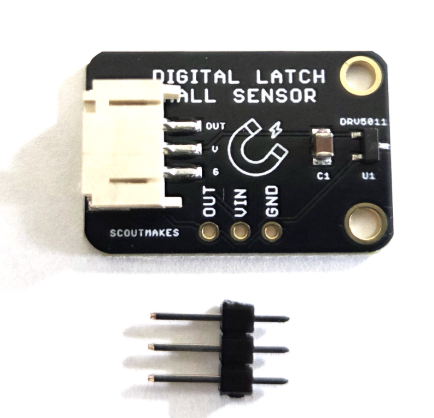
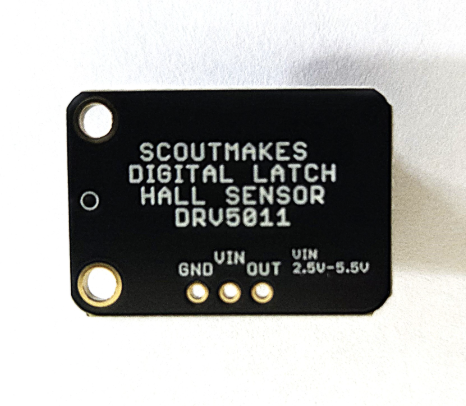
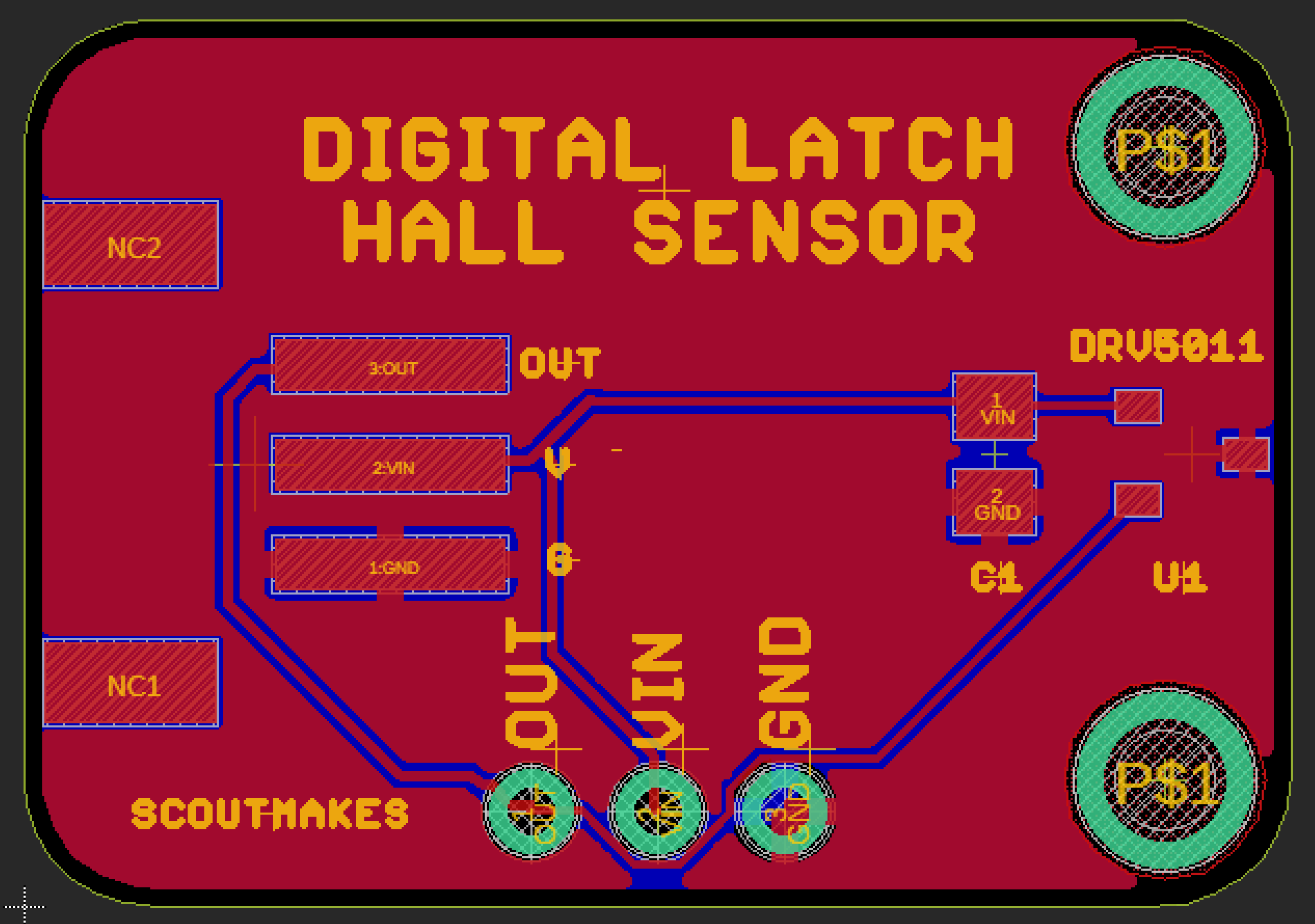
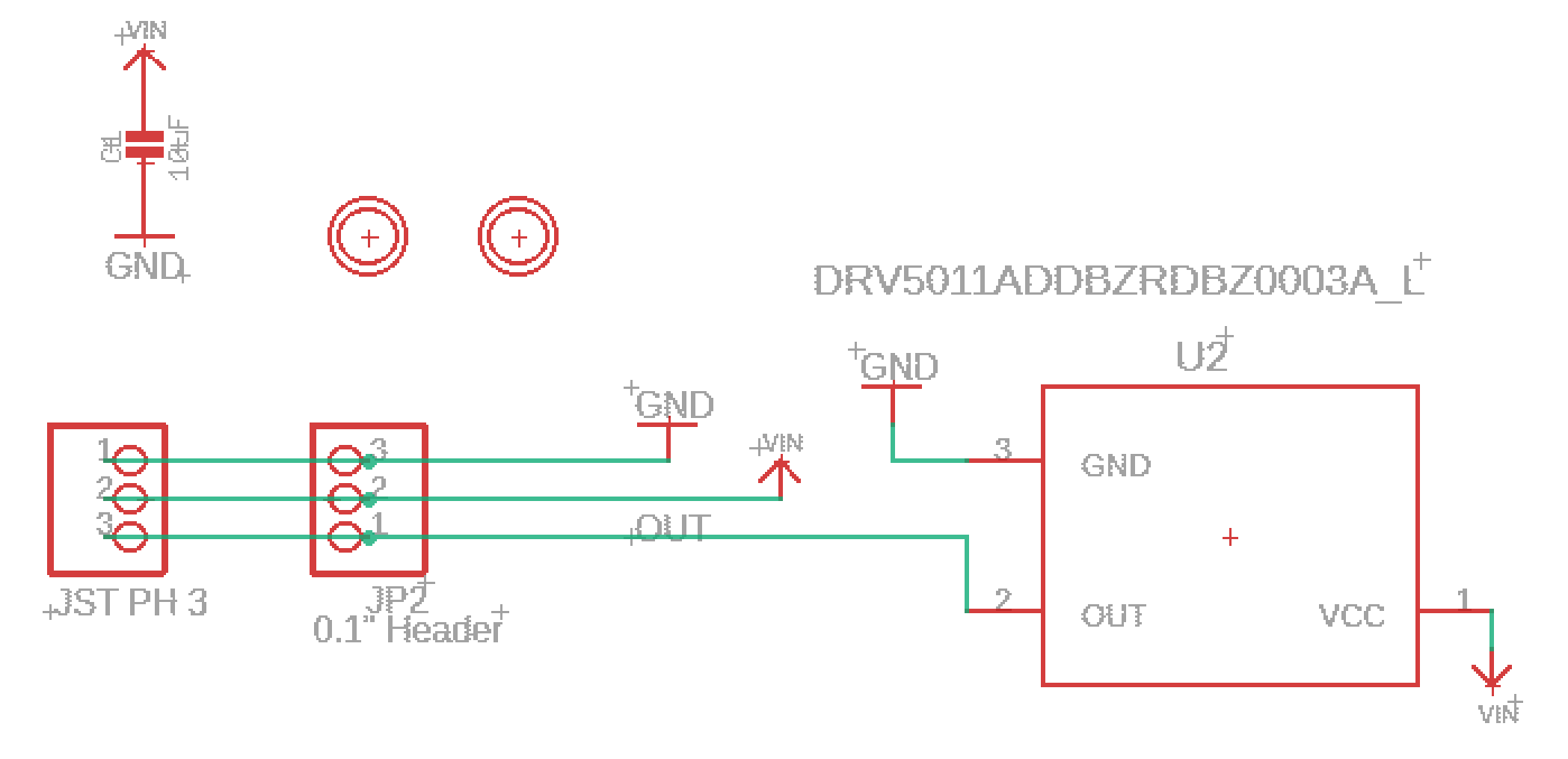
- Ultra-low power — designed for battery-sensitive and always-on applications
- Digital-latch behavior — output drives low when a south pole is detected and stays low until a north pole is applied, then drives high (and vice versa) — ideal for tracking direction, not just presence
- Push-pull CMOS output — no pull-up resistor required, keeping wiring simple
- JST-PH 3-pin connector — plug-and-play wiring, no soldering required for compatible systems
- CircuitPython ready — works out of the box with CircuitPython-compatible boards
- Breadboard friendly — standard 0.1" header pitch for easy prototyping
Works great with Adafruit's line of boards, Raspberry Pi, Arduino, and any microcontroller with a 3.3V or 5V digital input. See the TI DRV5011 product page for the underlying sensor datasheet.
Latch behavior: unlike an omnipolar switch, the DRV5011 requires alternating north and south poles to toggle its output — a single pole won't cause it to switch back on its own. This makes it well suited for rotary and incremental encoding applications (e.g. BLDC motor sensing, wheel speed, knob turning) where the sensor needs to register direction of magnetic pole transitions rather than simple presence/absence.
A note on sensor variant: the DRV5011 comes in several variants (package type and threshold sensitivity) that may change between production runs as component availability evolves. Always check the markings on the IC or the product page for the variant shipped with your order, and refer to the TI DRV5011 datasheet for full variant specifications before designing around a specific threshold. The current version (as of July 2026) ships with the DRV5011ADDBZR variant.
Design files, schematics, and CircuitPython example code are open source on GitHub.
Availability
Not yet listed with our distributor partners — the design is open source and available now on GitHub.